

Does your skin really repair itself while you sleep? Your skin is active around the clock, but sleep is an important part of the body’s normal recovery. A comfortable evening routine can support your skin barrier, remove makeup and sunscreen, and help you manage dryness or irritation.
There is no need for a shelf full of products or an elaborate 10-step routine. Understanding what happens to your skin at night—and choosing a few products that suit it—can make your nighttime skin care routine simpler and more effective.
What Happens to Your Skin While You Sleep?
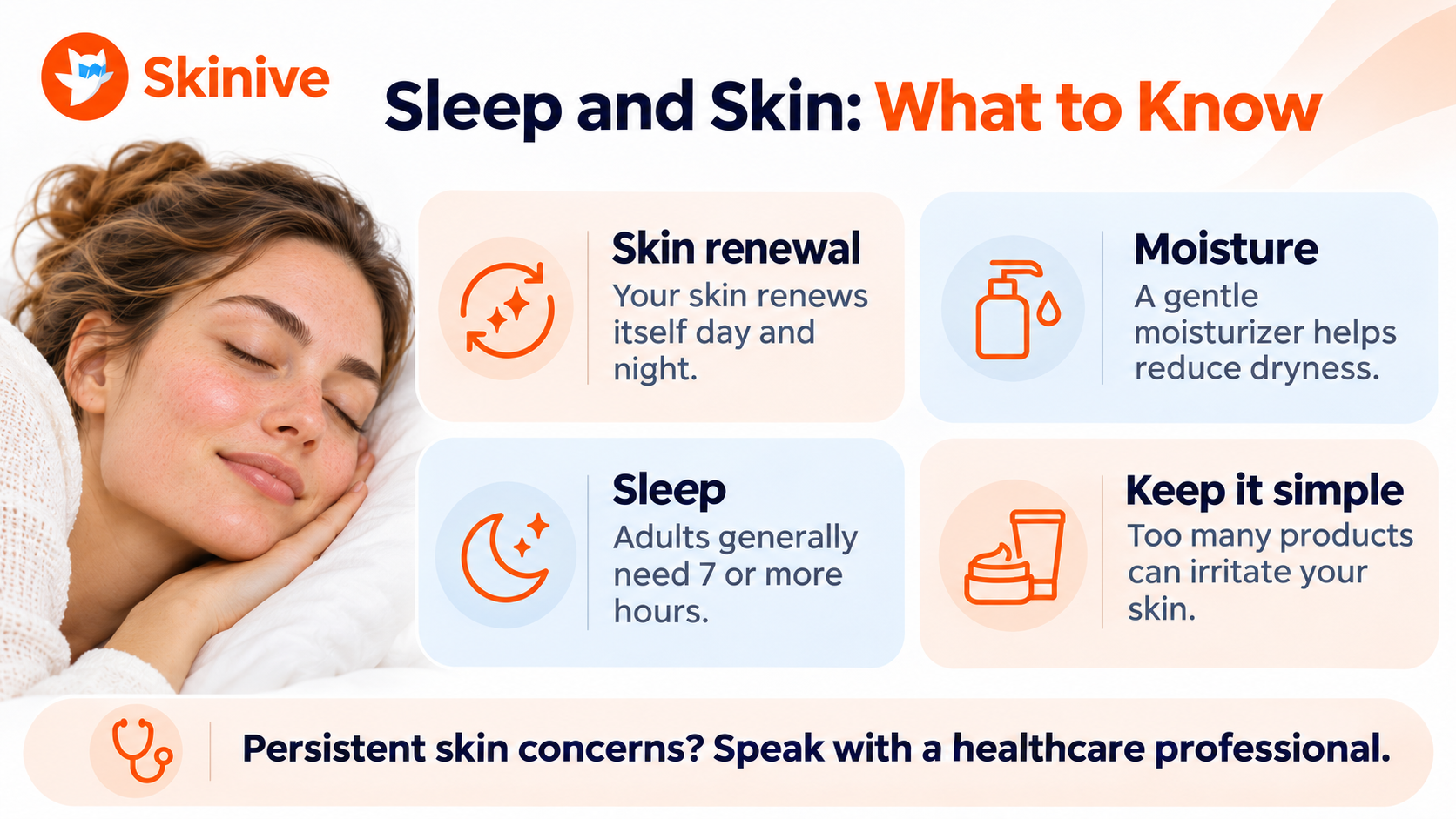
Your skin continually renews itself and maintains a protective barrier against the environment. These processes happen both day and night, although some skin functions follow a daily rhythm. Sleep supports the body’s normal recovery and overall health, but it does not erase sun damage or guarantee that a skin condition will improve overnight.
Your skin may also feel different at night. Dryness, itching or sensitivity can become more noticeable, and moisture loss varies throughout the day and between individuals. A well-tolerated moisturizer can help reduce dryness by supporting the skin’s outer barrier.
Despite popular claims, skin does not need an overnight “detox” or a special mask to breathe. Cleansing and moisturizing are useful because they remove residue and support the skin—not because they purge toxins.
How Does Sleep Affect Skin Health?
Sleep contributes to overall physical and emotional health. When you consistently sleep poorly, you may notice that you feel less rested or that existing skin discomfort seems harder to manage. Stress and disrupted sleep can also accompany some skin conditions, although the relationship varies and does not mean that poor sleep is the sole cause.
For most adults, the Centers for Disease Control and Prevention recommends at least seven hours of sleep, with recommended sleep duration varying by age. If you regularly struggle to sleep or feel tired despite allowing enough time for rest, discuss it with a healthcare professional.
If you experience persistent redness or irritation, learn more about possible causes of facial redness. Sleep and skin care can be part of your routine, but they do not replace an assessment or treatment for a medical condition.
A Simple Nighttime Skin Care Routine
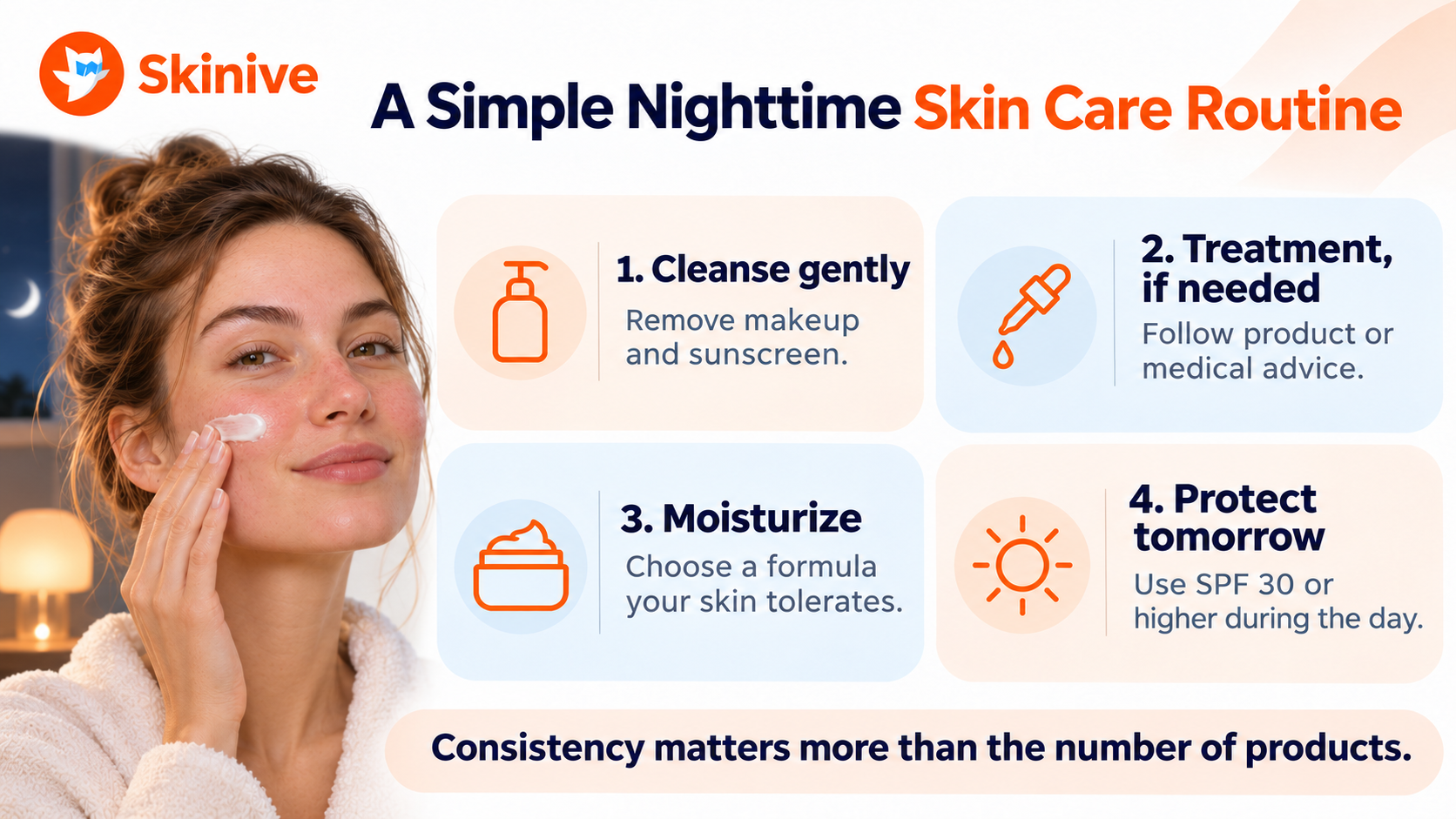
The best night skin care routine is one you can follow consistently without irritating your skin. Start with the essentials and add a targeted treatment only if you need one.
Step 1: Remove Makeup and Cleanse Gently
Before bed, remove makeup and sunscreen with a gentle cleanser that suits your skin. If you wear long-lasting makeup or water-resistant sunscreen, you may prefer a makeup remover followed by a mild cleanser. Double cleansing is optional: if one cleanser removes everything comfortably, you do not need a second.
Use your fingertips and lukewarm water. Avoid scrubbing, harsh brushes and very hot water, which can leave skin feeling tight or irritated. Pat dry with a clean towel.
Step 2: Apply a Treatment If You Need One
After cleansing, you may choose a product for a specific concern, such as acne or uneven skin tone. Follow the product directions and your clinician’s instructions for prescribed treatments. You do not need a serum or an active ingredient every night.
Introduce only one new product at a time. If your skin is stinging, unusually dry or peeling, simplify your routine and seek advice if irritation continues. If a prescribed product causes a reaction, contact the prescriber before changing your treatment.
Step 3: Moisturize
Apply a moisturizer your skin tolerates. Ingredients such as glycerin, hyaluronic acid and ceramides can help support hydration or the skin barrier. A lighter lotion or gel may feel comfortable on oily skin; a richer cream may suit dry skin. The best choice is the one that works for you.
Moisturizer is also useful for many people with acne-prone skin. Look for a product labelled non-comedogenic if clogged pores are a concern, while remembering that individual reactions vary.
Step 4: Protect Your Skin the Next Morning
Your evening routine works alongside daytime sun protection. Apply broad-spectrum sunscreen with SPF 30 or higher during the day, and use shade or protective clothing as appropriate. This is especially important when using products that can increase sun sensitivity.
Check local UV conditions with the Skinive UV Index App. A UV forecast does not guarantee that sunburn will not occur, so choose protection appropriate for your conditions and activities.
Which Ingredients Can You Use at Night?
Not every ingredient is necessary for every person. Choose products based on your skin’s needs and tolerance, rather than trying to use all of them at once.
Retinoids and Retinol
Retinoids are vitamin A derivatives used for certain concerns, including acne and signs of sun damage. Retinol is available in many cosmetic products, while some stronger retinoids are medicines. They can cause dryness and irritation, so introduce them gradually and use moisturizer. Follow the product directions or your prescriber’s plan.
Avoid retinoids during pregnancy. If you are planning a pregnancy, breastfeeding, or unsure whether a product is suitable, ask your healthcare professional. If your skin is already inflamed or very sensitive, speak to a clinician before introducing a retinoid.
Moisturizing and Barrier-Supporting Ingredients
Glycerin and hyaluronic acid help attract water, while ingredients such as ceramides and petrolatum can support the skin barrier or help reduce moisture loss. Formulation matters: a product that works well for one person may not feel right for another.
Exfoliating Acids
Products containing ingredients such as salicylic, glycolic or lactic acid may be useful for certain concerns, but more frequent exfoliation is not necessarily better. Overuse can lead to dryness, stinging and irritation. Avoid exfoliating damaged or sunburned skin, and seek advice before combining exfoliants with prescription treatments or other potentially irritating products.
How to Adjust Your Night Routine for Your Skin
Dry or Sensitive Skin
Choose a mild, fragrance-free cleanser and a moisturizer that feels comfortable. Avoid hot water and frequent scrubbing. If a product burns or consistently irritates your skin, stop using it and seek advice if the reaction persists.
Dryness and itch can also be associated with eczema or other skin conditions. A healthcare professional can help identify the cause if symptoms continue.
Oily or Acne-Prone Skin
Cleanse gently rather than trying to scrub oil away. A lightweight moisturizer can still be helpful. If you use acne medication, follow its directions and give it time to work; using multiple harsh products at once can make irritation worse.
Explore the Skinive Dermatology Atlas to learn more about acne and its visible signs. Persistent, painful or scarring acne is a reason to consult a dermatologist.
Redness-Prone Skin
Keep your routine simple and pay attention to products that trigger stinging or flushing. If you have persistent redness, visible blood vessels, acne-like bumps or irritated eyes, ask a healthcare professional for advice. These signs may have several causes, including rosacea.
Nighttime Skin Care Trends: What Is Worth Knowing?
Skin Cycling
Skin cycling usually means alternating nights with active products and gentler “recovery” nights. Spacing out potentially irritating ingredients can help some people tolerate them, but no fixed schedule is right for everyone. Follow your clinician’s instructions for prescribed medication, and adjust your routine to your own skin.
Slugging and Overnight Masks
“Slugging” generally refers to applying a thin layer of an occlusive product, often petrolatum, over moisturizer to reduce water loss. It may help some dry areas, but it is not necessary for everyone and may feel too heavy for acne-prone skin. Overnight masks are optional too; a suitable moisturizer is often enough.
Silk Pillowcases
A smooth pillowcase may feel comfortable and reduce friction for some people. However, evidence that silk pillowcases prevent wrinkles or treat skin conditions is limited. Choose clean bedding that feels comfortable rather than relying on a particular fabric as treatment.
How to Build Better Sleep Habits
Sleep supports more than your complexion. To make a restful night more achievable, consider a consistent sleep and wake time, a comfortable sleep environment and a relaxing routine before bed. Your needs and schedule may vary, and occasional poor sleep is normal.
If itching, pain, anxiety or another concern regularly keeps you awake, talk with a healthcare professional. Persistent sleep difficulties deserve attention in their own right.
Track Changes in Your Skin With Skinive
Photos and brief notes can help you remember when dryness, redness or breakouts appear. Photograph the same area in similar lighting and note any new products or symptoms. Differences in light and camera settings can affect how skin looks, so compare images cautiously.
Download Skinive to save skin observations and follow visible changes over time. Image-based results do not establish a diagnosis or replace an examination by a healthcare professional. The Skinive Dermatology Atlas also provides information about a range of skin conditions.
When Should You See a Dermatologist?
Seek professional advice if irritation is persistent, a rash is spreading, acne is painful or leaving scars, or a skin concern affects your sleep or quality of life. A clinician can consider your symptoms, medical history and treatments—not just a photograph.
If you are looking for specialist advice, explore Skinive’s resources to find a dermatologist in person or online.
A Better Nighttime Routine Starts With the Basics
Healthy skin does not depend on a complicated bedtime ritual. Gentle cleansing, a moisturizer that suits your skin, appropriate treatment when needed and daytime sun protection are a practical foundation. Add consistent sleep habits and adjust your routine as your skin’s needs change.


