

Ultraviolet (UV) rays are an invisible form of radiation that has a significant impact on skin health. While sunlight is essential for various bodily functions, excessive exposure to UV rays can lead to numerous skin issues, ranging from premature ageing to skin cancer. This guide will help you understand UV rays, their effects on skin, and how to protect yourself effectively.
What Are UV Rays?
UV rays are a form of electromagnetic radiation emitted by the sun. They are categorized into three types based on their wavelength: UVA, UVB, and UVC.
Types of UV Rays
- UVA Rays: These rays have the longest wavelength and can penetrate deep into the skin. They are primarily responsible for skin ageing and contribute to skin cancer.
- UVB Rays: These rays have a shorter wavelength and affect the skin’s surface. They are the main cause of sunburn and play a significant role in developing skin cancer.
- UVC Rays: These rays have the shortest wavelength and are mostly absorbed by the Earth’s atmosphere, meaning they do not reach the ground. Therefore, they are not a concern for skin health.
How UV Rays Affect Your Skin
Short-Term Effects
- Sunburn: UVB rays cause sunburn by damaging the DNA in skin cells. Symptoms include redness, pain, and peeling.
- Tanning: UV exposure stimulates melanin production, leading to a tan. While many view a tan as desirable, it is a sign of skin damage.
Long-Term Effects
- Premature Aging: UVA rays penetrate deep into the skin, breaking down collagen and elastin fibres. This results in wrinkles, sagging skin, and age spots.
- Hyperpigmentation: UV exposure can cause uneven skin tone and dark spots, known as hyperpigmentation.
- Skin Cancer: Both UVA and UVB rays contribute to the development of skin cancer, including melanoma, basal cell carcinoma, and squamous cell carcinoma.
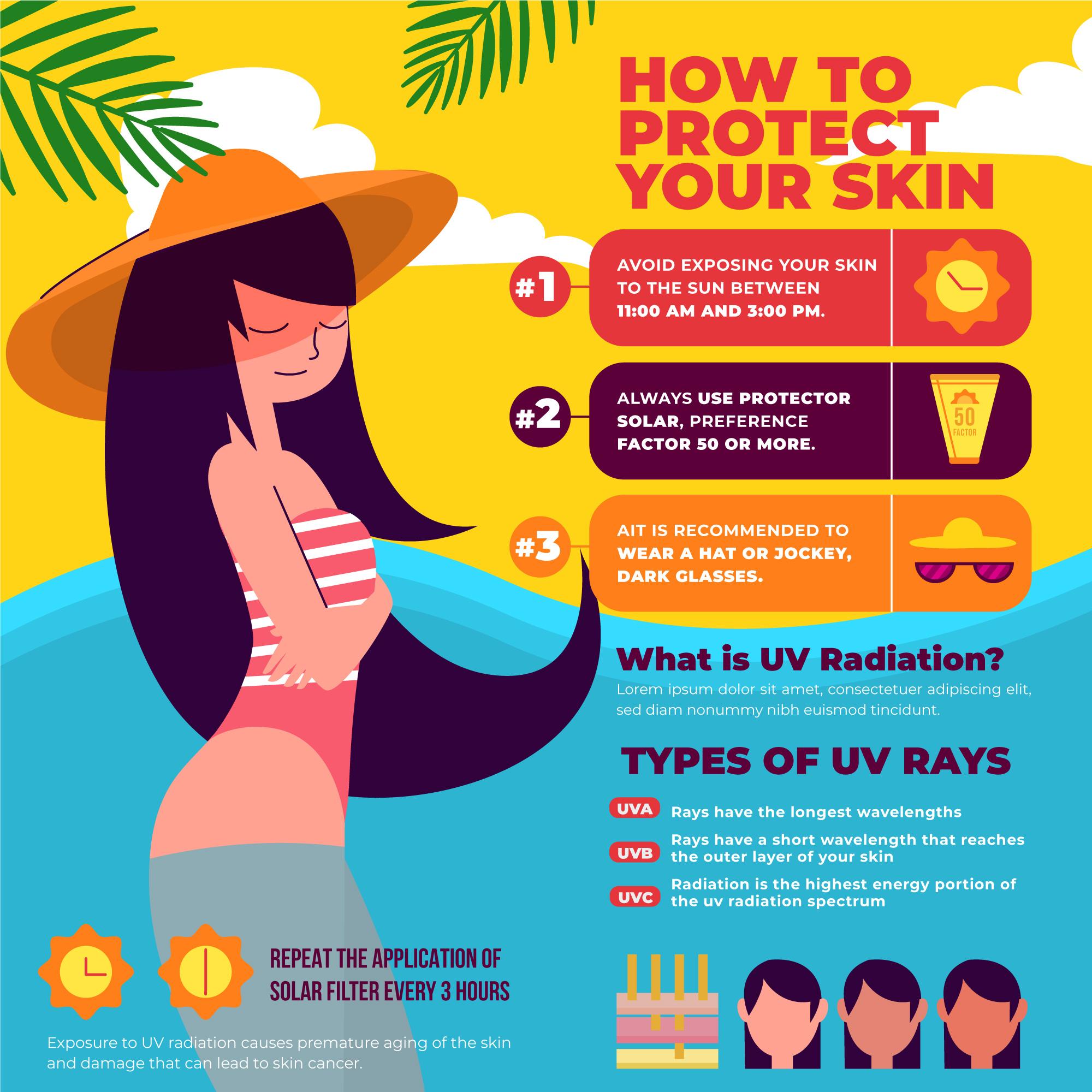
Protecting Your Skin from UV Rays
Use Sunscreen
- Broad-Spectrum Protection: Choose a sunscreen labelled “broad-spectrum” to protect against both UVA and UVB rays.
- SPF 30 or Higher: Use a sunscreen with an SPF of 30 or higher for adequate protection.
- Reapply Regularly: Apply sunscreen every two hours and after swimming or sweating.
Wear Protective Clothing
- Cover Up: Wear long sleeves, pants, and a wide-brimmed hat to shield your skin from UV rays.
- UV-Blocking Fabrics: Look for clothing with a UPF (Ultraviolet Protection Factor) rating for added protection.
Seek Shade
- Avoid Peak Hours: Stay out of direct sunlight between 10 a.m. and 4 p.m., when UV rays are strongest.
- Use Umbrellas and Canopies: Create shade with umbrellas, canopies, or by sitting under trees.
Wear Sunglasses
- UV Protection: Choose sunglasses that block 100% of UVA and UVB rays to protect your eyes and the delicate skin around them.
Check the UV Index
- Daily UV Index: Monitor UV index via Skinive app in your area to plan outdoor activities safely. The higher the index, the greater the need for protection.
Aktuellen UV Index prüfen und verfolgen
Zu verstehen, was der UV Index bedeutet, ist der erste Schritt – ebenso wichtig ist es, die aktuellen UV-Bedingungen im Alltag überprüfen zu können. Mit dem UV Tracker von Skinive kannst du den aktuellen UV Index und die Entwicklung im Tagesverlauf verfolgen. Die App berücksichtigt außerdem deinen Fitzpatrick-Hauttyp und LSF/SPF für eine personalisierte Schätzung der Sonnenexposition. So wird aus dem UV Index nicht nur eine abstrakte Wetterangabe, sondern eine praktische Information für die Planung deiner Zeit im Freien.
Check Today’s UV Index with Skinive
Knowing the UV Index is more useful when you can turn it into personalized guidance. The Skinive UV Index Tracker App lets you check current UV levels and forecasts, while also taking your Fitzpatrick skin type and SPF into account for personalized sun-exposure estimates. You can use the UV exposure timer while outdoors and access Skinive’s wider skin-monitoring tools to keep an eye on moles and other visible skin concerns over time.
Myths and Facts About UV Rays
Myth: You Don’t Need Sunscreen on Cloudy Days
Fact: Up to 80% of UV rays can penetrate clouds, making sunscreen essential even on overcast days.
Myth: Dark Skin Doesn’t Need Sunscreen
Fact: While dark skin has more melanin, which provides some protection, it can still suffer from UV damage and skin cancer.
Myth: Tanning Beds Are Safer Than Sunlight
Fact: Tanning beds emit harmful UVA and UVB rays, significantly increasing the risk of skin cancer and premature ageing.
Conclusion
Understanding UV rays and their effects on your skin is crucial for maintaining healthy, youthful skin. By taking proactive steps to protect yourself from UV exposure, you can reduce the risk of sunburn, premature ageing, and skin cancer. Remember to use sunscreen, wear protective clothing, seek shade, and stay informed about the UV index.


