

Facial redness can appear after time in the sun, a workout or a stressful moment. It can also last longer or return frequently, sometimes alongside burning, itching, dryness or bumps.
There is no single cause of facial redness. A new skincare product may irritate the skin, while recurring flushing and persistent colour changes can be associated with conditions such as rosacea or eczema. Understanding the pattern—and any symptoms that come with it—can help you decide how to care for your skin and when to ask a healthcare professional for advice.
What Is Facial Redness?
Facial redness is a visible change in skin colour that may affect the cheeks, nose, forehead, chin or other areas of the face. It can be temporary, come and go, or remain visible for a longer time.
Depending on the cause, you may also notice:
- Warmth, burning or stinging.
- Itching or a feeling of tightness.
- Dryness, flaking or rough patches.
- Small bumps, pustules or visible blood vessels.
- Swelling or sensitivity to skincare products.
Redness is not equally easy to see on every skin tone. On darker skin, colour changes may appear brown, purple or darker than the surrounding skin. Burning, warmth, dryness and swelling can be useful signs to pay attention to as well.
What Causes Redness on the Face?
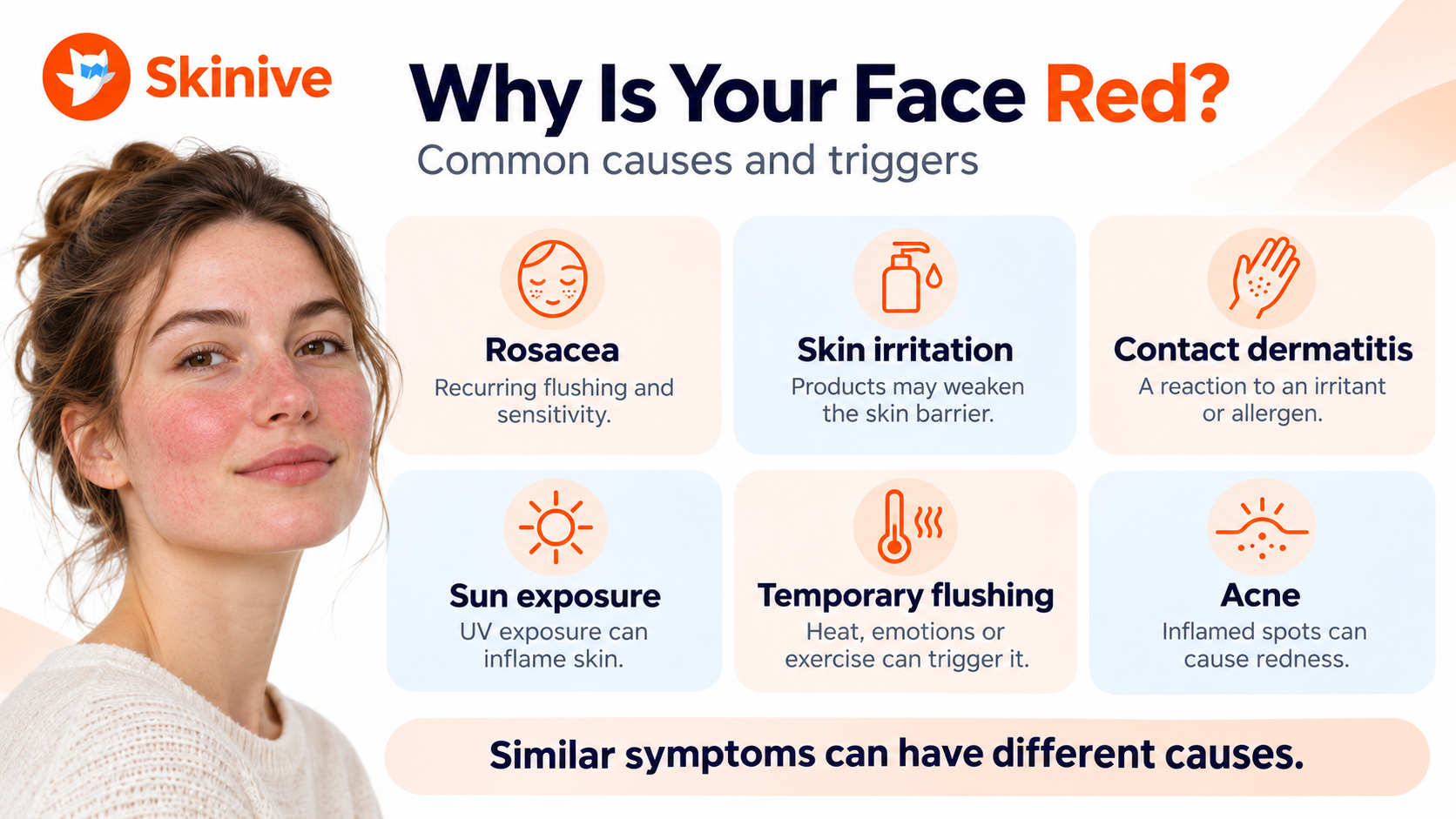
1. Temporary Flushing
Your face may become flushed when blood vessels widen in response to heat, exercise, strong emotions, alcohol or spicy food. Temporary flushing often fades after the trigger passes.
If flushing happens frequently, lasts a long time or is accompanied by persistent colour changes, burning or bumps, a healthcare professional can help assess whether a condition such as rosacea may be involved.
2. Rosacea
Rosacea is a long-term inflammatory skin condition that commonly affects the central face. It may cause recurring flushing, persistent redness or other colour changes, visible blood vessels, burning and acne-like bumps.
Some people with rosacea also have dry, irritated or gritty eyes. Rosacea can look different from person to person and may be less immediately visible on darker skin.
Triggers vary, but sunlight, heat, certain skincare products, alcohol and spicy foods can contribute to flare-ups for some people. Having one of these triggers does not by itself mean you have rosacea.
3. Irritation From Skincare Products
A product that suits someone else can irritate your skin. Scrubs, exfoliating acids, retinoids, fragranced products and frequent use of multiple active ingredients can all contribute to irritation.
Signs may include stinging, burning, dryness, flaking or redness—particularly after applying a product. Irritation is different from an allergy, although the two can sometimes look similar.
4. Contact Dermatitis and Eczema
Contact dermatitis can develop when the skin reacts to an irritating substance or an allergen. Possible sources include cosmetics, fragrances, hair products, sunscreen ingredients, jewellery and other materials that come into contact with the face.
The affected skin may feel itchy, dry, swollen or sore. The reaction can appear where the product was applied, although ingredients transferred from the hands or hair can affect other areas too.
Atopic dermatitis, a common form of eczema, can also cause dry, itchy and inflamed skin. A clinician can help distinguish between eczema, contact dermatitis and other causes.
You can learn more about dermatitis and related skin conditions in the Skinive Dermatology Atlas.
5. Sun Exposure
Sunburn can make facial skin painful, warm and visibly inflamed. Sun exposure can also trigger flushing or worsen an existing condition such as rosacea.
If your skin is sunburned, move out of the sun, cool the area gently and protect it from further exposure. Seek medical advice for severe sunburn, especially if it involves extensive blistering or you feel unwell.
6. Acne and Other Skin Conditions
Inflamed acne lesions can make parts of the face appear red. Other conditions, including seborrhoeic dermatitis and periorificial dermatitis, can also cause facial colour changes, scaling or bumps.
Because several conditions can look alike, a photo or a single symptom is not always enough to determine the cause. The right treatment depends on what is causing the inflammation.
Explore the Skinive Dermatology Atlas for more information about skin conditions and their visible characteristics.
How to Reduce Facial Redness: Start With Gentle Care
The best approach depends on the cause. If your skin is mildly irritated and you are otherwise well, a simple routine may help you avoid further irritation while you arrange advice if needed.
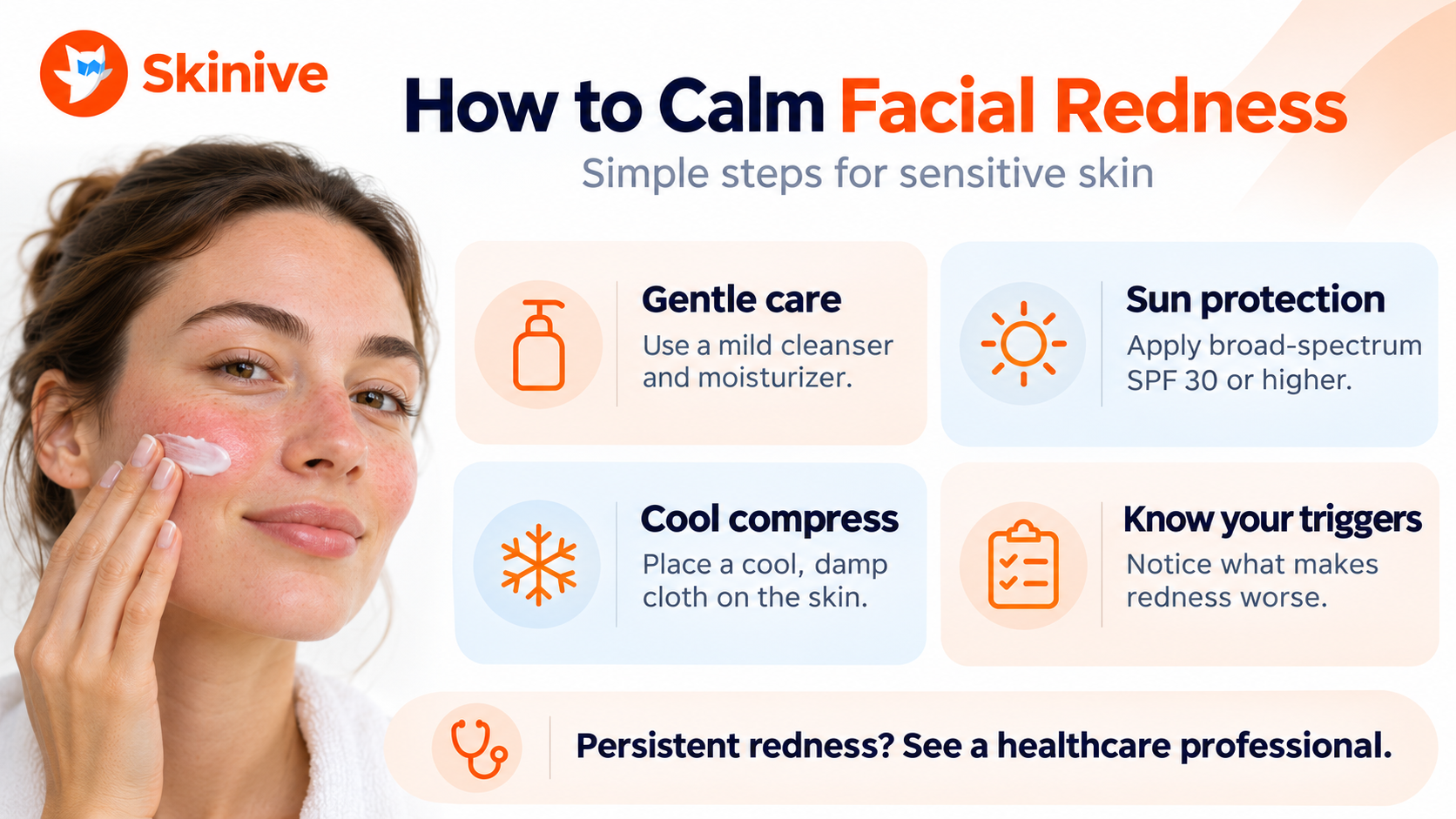
Keep Your Routine Simple
Use a mild, fragrance-free cleanser and wash gently with your fingertips. Rinse with lukewarm water and pat the skin dry rather than rubbing.
Apply a moisturiser that your skin tolerates. If a product consistently burns, stings or makes the reaction worse, stop using it and seek advice if the irritation persists.
Temporarily pause harsh scrubs and products that irritate your skin. If you use prescribed medication, speak with your clinician before changing your treatment.
Protect Your Skin From the Sun
Use a broad-spectrum sunscreen with SPF 30 or higher, and add shade or a wide-brimmed hat when appropriate. If sunscreen stings, look for a fragrance-free formula designed for sensitive skin.
Some people find mineral sunscreens containing zinc oxide or titanium dioxide more comfortable. Tinted formulations may be an option if a mineral sunscreen leaves a visible cast.
You can use the Skinive UV Index App to check UV conditions and help plan sun protection. A UV forecast or exposure estimate does not guarantee that sunburn will not occur, so continue to use appropriate protection.
Introduce New Products Carefully
“Natural,” “hypoallergenic” or “for sensitive skin” does not guarantee that a product will suit everyone. Introduce one new product at a time so it is easier to notice a reaction.
Before using a new product more widely, test it on a small area of skin for seven to ten days. If you develop a reaction, wash the product off and stop using it. A home test cannot rule out every allergy; persistent or unclear reactions may need professional assessment.
Cool the Skin Gently
A cool, damp compress may help relieve discomfort temporarily. Avoid applying ice directly to the skin or using very cold products if cold makes your symptoms worse.
Ingredients marketed as “calming,” including botanical extracts, can still irritate some people. A shorter ingredient list and a product you already tolerate may be more useful than adding several new remedies.
Should You Use Medication for Facial Redness?
Medication can be helpful for some causes of facial redness, but the choice depends on the diagnosis.
For example, a dermatologist may recommend treatments for rosacea, eczema, acne or an infection. Some rosacea treatments target persistent colour changes, while others are intended for inflammatory bumps. Laser or light-based procedures may be considered for certain visible blood vessels or persistent colour changes.
Do not start using a steroid cream on your face for unexplained redness without medical advice. Steroids can be appropriate for some conditions when prescribed, but they may worsen rosacea or contribute to other facial skin problems. If you are already using a prescribed steroid, ask your clinician before stopping or changing it.
Identify Your Personal Triggers
Not every common trigger will affect you. Rather than avoiding a long list of foods or activities, look for patterns in your own experience.
You may find it useful to note:
- When the redness or flushing appears and how long it lasts.
- Whether your skin feels warm, itchy, painful or dry.
- Products applied before the reaction, including haircare and makeup.
- Sun exposure, temperature changes, exercise or emotional stress.
- Any other symptoms, including eye irritation.
A diary can help you have a more productive conversation with a healthcare professional. It cannot prove that a particular food or product caused a flare. Avoid restrictive dietary changes unless they are supported by a qualified professional.
How to Track Facial Redness With Photos
Photos can help you remember how an area looked at different times. To make comparisons more useful:
- Photograph the same area of your face.
- Use similar lighting, distance and camera angle.
- Avoid beauty filters, retouching and heavy makeup on the area.
- Record the date and any symptoms you noticed.
Changes in lighting or camera settings can make skin look more or less red, even when the skin itself has not changed. Compare photos cautiously, and do not use them alone to decide whether a medical treatment is working.
Skinive can help you save images and explore information about visible skin changes. Its image-based results do not establish the cause of facial redness or replace an examination by a healthcare professional.
Download Skinive to save skin observations and follow visible changes over time.
When Should You See a Healthcare Professional?
Arrange an appointment if facial redness:
- Persists, keeps returning or is getting worse.
- Burns, stings, itches or affects your sleep or quality of life.
- Appears alongside bumps, scaling, swelling or visible blood vessels.
- Develops after using a product and does not settle after you stop using it.
- Is accompanied by recurring eye irritation or a gritty feeling in the eyes.
A clinician can consider your symptoms, medical history, product use and other factors that may not be visible in a photograph.
If you are looking for professional advice, explore Skinive’s resources to find a local or online dermatologist.
When to Get Urgent Help
Seek emergency help immediately if your lips, mouth, tongue or throat suddenly swell, or if you have difficulty breathing or swallowing. These can be signs of a serious allergic reaction.
Seek urgent medical assessment if facial skin becomes painful, hot and swollen, particularly if you also feel unwell or have a fever. These symptoms can be associated with an infection that needs prompt treatment.
If you have a painful eye, blurred vision or sensitivity to light—especially alongside possible rosacea—seek urgent medical advice.
Understanding Your Skin Is the First Step
Facial redness can have many causes, from a short-lived reaction to a condition that needs medical care. Gentle skincare, sun protection and a record of your symptoms can help you notice patterns without relying on guesswork.
If redness is persistent, uncomfortable or concerning, a healthcare professional can help identify the cause and recommend an appropriate plan.


